Review: Christmas Scene 2 Shadow Box SVG 7 Layer
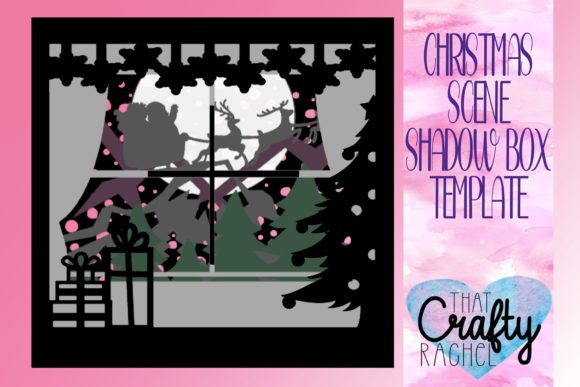
As a designer who spends more time staring at stitch simulations than actual holiday decorations, I approach new files with a mix of excitement and skepticism. When I first opened the Christmas Scene 2 Shadow Box SVG 7 Layer, my initial reaction wasn't just about the festive theme; it was about the structural integrity of the design for physical production. While this file is marketed primarily as a digital asset for Cricut and Silhouette machines to create paper or cardstock shadow boxes, my mind immediately went to its potential adaptation for high-end embroidery projects. The description highlights a forest and mountain landscape with seven distinct layers, starting with presents and snowflake garlands. This level of segmentation is rare in standard digital embroidery files, offering a unique opportunity for texture play if handled correctly.
Visual Depth and Design Personality
The mood this design creates is serene yet celebratory. Unlike the chaotic, cluttered holiday graphics we often see in December, this layout relies on negative space and layering to tell a story. The separation of elements—mountains in the back, forest mid-ground, and festive details like garlands in the front—suggests a sophisticated visual personality. For an Etsy seller or boutique owner, this is gold. It moves away from the generic "Santa and Reindeer" trope and offers something that feels like a piece of art rather than a logo.
However, translating a 7-layer cut file into a stitched finished product requires careful planning. In a paper shadow box, layers have physical depth. In embroidery, we simulate this through thread weight, stitch type, and sequencing. If you are considering using this for a custom apparel line, imagine the mountains rendered in a flat fill stitch with a matte thread, while the foreground snowflake garland uses a slightly raised satin stitch or even a corded technique to mimic that 3D effect. The visual appeal lies in the clarity of these separated zones. There is no muddy blending here; every element has its place, which is crucial for maintaining professionalism in commercial embroidery.
Real-World Application: The Holiday Tote Scenario
Let's walk through a realistic scenario. Imagine a client requests a limited run of heavy canvas tote bag designs for a local holiday market. They want something elegant that doesn't scream "discount store." The Christmas Scene 2 Shadow Box SVG 7 Layer fits this brief perfectly, provided we adapt it. I would visualize this design centered on a natural or deep navy canvas tote.
In this context, the "presents" layer mentioned in the product description becomes the focal point. Instead of cutting these out of cardstock, we would digitize them as appliqué shapes or dense fill areas. The thread colors would need to be selected with high contrast in mind—perhaps metallic golds for the garland against deep greens for the forest. The result would be a handmade product that feels substantial and valuable. Customers are willing to pay a premium for items that look complex and thoughtful. This design, with its layered narrative, signals effort and artistry, directly boosting customer trust and brand consistency.
Beyond totes, consider sweatshirt embroidery. A oversized crewneck with this scene stitched large across the chest, perhaps omitting the tiniest details to prevent puckering, could become a signature item for a winter collection. The key is recognizing that while the source file is a 3D SVG intended for cutting, its composition is inherently suitable for multi-color stitching where registration is key.
Navigating Technical Challenges
While the aesthetic potential is high, we must address the technical realities. This is not a design you can simply drop into your software and stitch out without thought. Because the original file is designed for layering in a shadow box, the details might be finer than what is ideal for certain fabrics. If you are working on a textured fabric like a waffle knit towel or a fuzzy fleece blanket, those tiny snowflake details could get lost or cause thread breaks.
You need to be extremely cautious with hoop size limitations. Seven layers of detail often imply a larger overall footprint. If you attempt to shrink this down to fit a small cap or a baby onesie, you risk losing the definition of the forest and mountains. For baby embroidery, simplicity is usually safer; the intricate layering here might be too dense for delicate skin or small hoops. Similarly, curved surfaces like caps present a challenge. The horizontal expanse of a mountain range does not always play nicely with the curvature of a front panel unless the design is significantly simplified or split.
Another critical factor is stitch density. If you are converting this SVG into an embroidery file, you must manually adjust the density of the fill stitches. A direct conversion might result in a cardboard-like stiffness, especially if all seven "layers" are stitched densely on top of each other. On dark fabrics, you will need to plan your underlay carefully to ensure the mountain peaks pop without requiring excessive stitch counts that compromise the fabric texture.
Designer Notes for Commercial Success
Before committing this design to a paid client order or listing it as a small shop product, there are several non-negotiable steps. First, always test the design on scrap fabric that matches your final material. What looks crisp on a screen can behave differently on cotton versus polyester blends. Check the thread color contrast specifically; sometimes two shades of green that look distinct on a monitor blend together once stitched.
Since the source is described as a Shadow Boxes kit, verify the licensing terms explicitly. Just because you can buy the SVG does not automatically grant you the right to sell embroidered versions of it. Many digital creators license their files for personal crafting or specific cutting machine use, not for commercial design assets in the embroidery world. Confirm this before investing time in digitizing or stitching.
I also recommend creating black-and-white mockups of the stitch-out. This strips away the distraction of color and lets you see if the running stitch outlines and fill areas hold up structurally. Does the snowflake garland look like a solid line, or does it break up? Are the corners of the presents sharp or rounded due to pull?
Finally, consider the end-user experience. If this is for a personalized gift or a holiday embroidery item that will be washed frequently, ensure your stabilizer choice is robust. A tear-away might not be enough for a design with this much coverage; a cut-away stabilizer could provide the necessary longevity to keep the mountains from warping after the third wash.
Final Verdict on Value and Usability
The Christmas Scene 2 Shadow Box SVG 7 Layer is a compelling starting point for creative entrepreneurs looking to elevate their holiday offerings. Its strength lies in its compositional depth, which translates well into high-value embroidered goods when treated with respect for the medium's limitations. It is not a plug-and-play solution for every machine or fabric, but for the experienced decorator willing to tweak density, select premium threads, and choose the right canvas, it offers a pathway to creating standout printable mockup visuals and tangible products that resonate with buyers. By understanding the bridge between digital layering and physical stitching, you can turn this forest scene into a profitable asset for your craft business.