Human Head Illusions: 3D SVG Shapes for Bold Branding
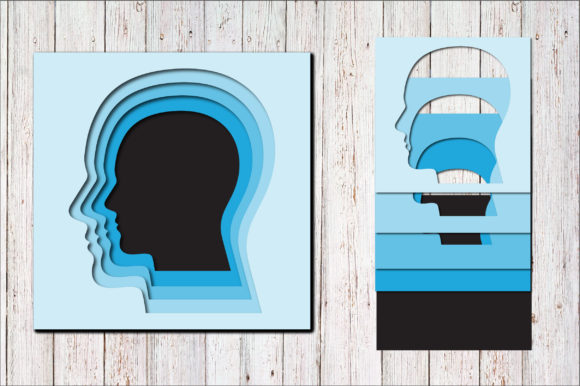
When I first opened the Human Head Illusions package, my immediate reaction was one of cautious intrigue. As a designer who spends most of my week refining brand identities and prepping files for print-on-demand clients, I am constantly on the lookout for assets that offer more than just a pretty picture. I need elements that carry weight, tell a story, and hold up under the scrutiny of a commercial license audit. This collection of Shapes immediately struck me as a powerful tool for projects requiring a surreal, psychological, or deeply human touch. The visual mood here is distinct; it moves away from flat, generic iconography and leans into a dimensional, almost sculptural aesthetic that demands attention.
Imagine a scenario where I am working with a boutique mental health awareness campaign or an avant-garde fashion label launching a new seasonal line. The client wants visuals that provoke thought rather than just decorate a space. This is exactly where Human Head Illusions shines. The design language suggests complexity and depth, making it an ideal anchor for a brand identity that wants to stand out in a crowded creative marketplace. Unlike standard clipart that often feels disposable, these illustrations feel like intentional art pieces, ready to be integrated into high-end marketing visuals.
Integrating Surrealism into Commercial Design Workflows
In a real-world application, the versatility of this graphic design asset becomes apparent quickly. I tested the files across several potential deliverables for a hypothetical client—a local artisan coffee shop rebranding itself with a focus on "mindful brewing." For their packaging design, specifically the limited edition bag labels, the 3D SVG format proved invaluable. Because the vectors are clean and scalable, I could resize the head illusions to fit intricate die-cut lines without losing edge definition. This is crucial for sticker design and product mockups where pixelation can kill a sale.
For digital applications, such as social media graphics and web design, the transparent background options (likely PNGs included in the bundle) allowed for seamless layering over textured backgrounds. I envisioned using these shapes as hero graphics on a landing page, perhaps paired with a bold sans-serif font to create a striking contrast between the organic, illusionary forms and rigid typography. For content creators and bloggers, these assets are perfect for editorial design within blog posts discussing psychology, creativity, or self-improvement. They add a layer of professional polish that free stock photos often lack.
The potential for print-on-demand sellers is also significant. If you are running an Etsy product line focused on statement tees or tote bags, these illusions offer a unique angle. A t-shirt design featuring a fragmented or illusionary head profile can appeal to niche audiences looking for streetwear with an artistic edge. The key here is the "instant digital download" nature of the product; having immediate access to SVG, AI, and PNG formats means I can iterate on designs rapidly, testing different colorways and compositions before committing to a final proof.
Navigating Visual Hierarchy and Readability Challenges
However, a professional review must address limitations. While Human Head Illusions are visually arresting, they require careful handling regarding visual hierarchy. These are complex shapes. If placed in a layout that is already crowded with text or other decorative elements, the design can become chaotic. In my assessment, these assets work best when given breathing room. They should act as the focal point—the star of the show—rather than a supporting accent in a busy composition.
There are specific contexts where I would advise against using them. For instance, in strictly corporate environments or minimalist branding projects that rely on extreme simplicity, these illusions might feel too heavy or distracting. Similarly, if you are designing for very small sizes, such as a favicon or a tiny social media profile icon, the intricate details of the illusion might get lost, reducing the impact to a muddy blob. It is essential to preview the asset at various scales. What looks stunning on a large poster might fail on a business card if the lines are too fine.
Readability is another factor. When pairing these graphics with typography, one must ensure the text does not compete with the visual noise of the illusion. I found that pairing them with clean, geometric fonts worked better than ornate script fonts, which tended to clash with the surreal nature of the heads. The goal is to maintain brand consistency; the graphic should enhance the message, not obscure it.
Technical Execution and Designer Notes
From a technical standpoint, the inclusion of multiple file formats is a massive plus for any serious designer. The presence of SVG and AI files indicates that these are true vectors, allowing for infinite scalability and easy color manipulation. Before handing off files to a client or sending them to a printer, I always perform a few checks. First, I test the design in black and white. If the illusion relies entirely on color gradients to make sense, it may not translate well to single-color screen printing or engraving. Fortunately, the structural integrity of these Shapes seems robust enough to hold up in monochrome.
Contrast checking is non-negotiable. I recommend placing the Human Head Illusions on both light and dark backgrounds to ensure the transparency holds up and no unwanted halos appear around the edges. For those using Cricut or Silhouette machines for crafters projects, the SVG cut files should be inspected for open paths or unnecessary nodes that could cause weeding nightmares. A clean cut path is the difference between a professional sublimation design and a amateur-looking hobby project.
Furthermore, verifying the commercial license is the most critical step. As a designer managing client projects, I cannot risk copyright infringement. Ensuring that the "Instant Digital Download" comes with a clear commercial license allows me to use these assets confidently in paid client work, whether for a local event flyer or a global ad campaign. It transforms the asset from a mere curiosity into a viable business tool.
Ultimately, Human Head Illusions represents a strong addition to a designer's toolkit. It bridges the gap between abstract art and functional commercial design. Whether you are building a Canva template for coaches, creating printable wall art for a home decor shop, or developing a full design bundle for a startup, these assets provide the kind of visual intrigue that stops the scroll. They are not just images; they are conversation starters. With proper attention to spacing, contrast, and licensing, they can elevate a standard project into something memorable and distinctly modern.